Home Blog Page 9

Download Android 14 Beta 1.1 patch to resolve major bugs on your device

0

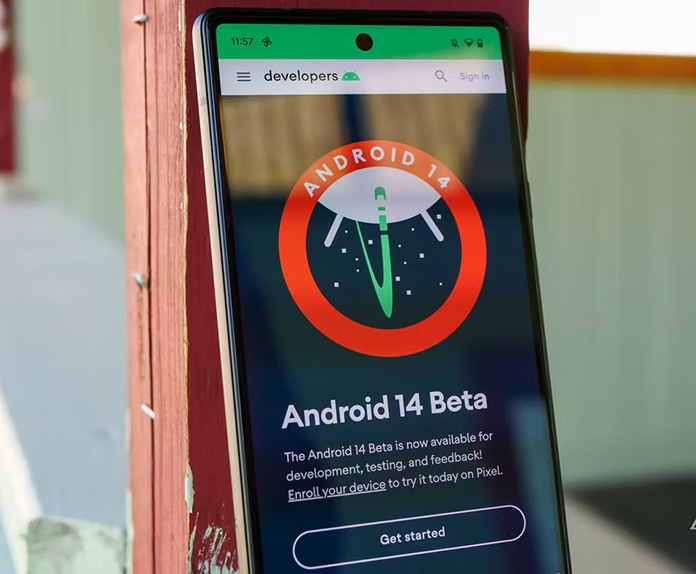
The release of the first open beta for Android 14 arrived as scheduled earlier this month, allowing anyone with a supported Pixel phone to test the next version of Google’s mobile OS. However, testers were met with a plethora of bugs that made the experience frustrating. Thankfully, Google has now released the Beta 1.1 patch, which addresses many of the issues faced by users.

As a mid-cycle launch, there aren’t many new features or secrets hidden throughout this OS. Instead, the focus is on resolving some of the worst bugs such as unresponsive fingerprint sensors, system crashes, failed SIM detection, and missing network information in the status bar. During my time testing Android 14 a few weeks ago, I faced most of the issues that this patch targets. Therefore, it’s great to see Google swiftly addressing these concerns.

If you’re already part of the Android 14 beta program, the patch will arrive as an OTA update soon. Additionally, you can download the OTA files from Google’s website and flash them manually. If you’re not part of the beta program and would like to try it out, installing it is as simple as a few clicks on your PC. By manually flashing it onto your device, you can also skip the waiting process.

Summary of the article:

  • Android 14 Beta 1.1 patch is now available for download.
  • This mid-cycle launch is focused on resolving major bugs, rather than introducing new features.
  • Issues addressed by the patch include unresponsive fingerprint sensors, system crashes, failed SIM detection, and missing network information in the status bar.
  • Users who are already enrolled in the beta program will receive the patch as an OTA update soon.
  • Users who aren’t part of the beta program can manually download the OTA files or flash them onto their device to avoid waiting.

WhatsApp’s Redesigned Architecture Enables Multi-Phone Support

0
Image Credit: thenextweb.com

WhatsApp has been working to improve its instant messaging platform by making it usable across multiple devices at once. The company, owned by Meta, has been trying to achieve this goal for a few years and has made significant progress. Initially, it created a web interface that was followed by the ability to use accounts with secondary devices. Recently, WhatsApp multi-device support was expanded to allow users to link as many additional smartphones as they want to their account, in addition to the primary device and up to four other linked devices.

WhatsApp had to completely redesign its underlying architecture to allow a smartphone to be one of the four linked devices per account. Beta users were initially limited to using just one smartphone as a linked device, in addition to their primary handset. While workarounds using Companion mode designed for tablets were used with some success, the removal of this limitation has been a long time coming.

WhatsApp recently removed this limitation for all beta users, and now stable channel users can also benefit from the convenience of using one WhatsApp account on any combination of smartphones, computers, and Android tablets. However, there are still two quirks: users can only have four linked devices, and none of them can be an iPad. While there’s no native iPad app support, users can use a web login on the tablet’s browser as a workaround.

With the redesigned architecture, every linked device communicates with WhatsApp servers independently to keep chats synced. This also means that the primary smartphone needs to come online at least once every 30 days to keep the linked devices operational, but can remain switched off otherwise. Meta promises that end-to-end encryption remains available, regardless of which device is used to access an account.

This new development should be incredibly useful for anyone who juggles multiple smartphones, especially those who want all their devices to access the same WhatsApp account. Multi-device support combined with self-messaging is also handy for transferring files between linked devices. Small businesses could also benefit from this feature as team members can use the same WhatsApp Business account to tackle multiple customer queries simultaneously.

Meta has also announced a new QR-free way to link new devices to your account, which will be rolled out in the coming weeks. While multi-phone support is already being rolled out, users will have to get used to the fact that linked smartphones don’t work exactly like the primary one.

Summary:

  • WhatsApp now allows users to link as many additional smartphones as they want to their account, in addition to the primary device and up to four other linked devices.
  • The primary smartphone needs to come online at least once every 30 days to keep the linked devices operational but can remain switched off otherwise.
  • End-to-end encryption remains available, regardless of which device is used to access an account.
  • Small businesses could benefit from this feature as team members can use the same WhatsApp Business account to tackle multiple customer queries simultaneously.
  • A new QR-free way to link new devices to your account will be rolled out in the coming weeks.

Galaxy Z Flip 5: Rumors of a Larger Cover Display and Improved Hinge

0

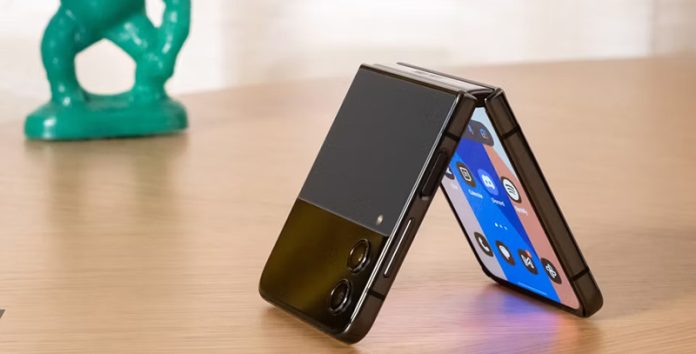
Samsung is gearing up to launch its new lineup of foldable devices, which are still under wraps. While there is no official word on the upcoming devices, there are rumors that the Galaxy Z Flip 5 could be Samsung’s most idealized folding phone yet. Leaks from earlier this month suggested that the Z Flip 5 could have a larger cover display with an always-on feature. Now, a new leak has shown off an unusual design, with the display rumored to resemble the shape of a tabbed folder.

The latest leak supports the idea that the display won’t just grow in size, but will also take a unique shape. Prominent leaker Ice Universe shared a render that shows the display resembling a tabbed folder, but the dimensions are not specified. Previous leaks suggested that it could be between 3-4 inches, which is a significant improvement compared to the Galaxy Z Flip 4’s exterior screen of only 1.34 inches. This limited the multitasking capabilities of the device, allowing users to only check notifications and accept calls.

However, with a bigger display, battery life could become a concern for the Galaxy Z Flip 5. In our review of the Galaxy Z Flip 4, we found that the battery endurance was mediocre, even with a smaller exterior display.

In addition to a larger exterior screen, Samsung could also improve the Galaxy Z Flip 5’s hinge. Reports suggest that its larger sibling, the Galaxy Z Fold 5, will replace its hinge with one similar to Oppo’s foldable phones, which allows it to be folded shut without leaving a gap between the top and bottom halves of the display.

The official launch of Samsung’s new foldable devices is expected to take place at Unpacked this summer, and we can expect more leaks to surface, providing additional information about the upcoming Galaxy Z Flip 5.

Mivi DuoPods K1: The Perfect Companion for Outdoor Activities and Workouts

0

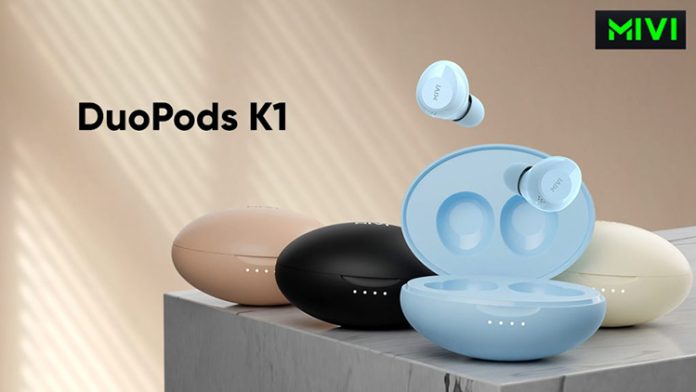
Mivi, a business specializing in audio equipment, has introduced the DuoPods K1 earphones in India. The new earphones are part of the “Made in India” audio accessory range and have a battery life of up to 42 hours of continuous playback. The Mivi DuoPods K1 joins the DuoPods K7, released earlier in the month.
The substantial 10.5mm drivers in the DuoPods K1 produce deep bass sounds, making it a fantastic choice for audiophiles. It supports Bluetooth 5.3 technology, with a connectivity range of up to 10 meters. The DuoPods K1’s tiny form offers high-quality audio output that is sleek and stylish, complementing any style.

The earphones ensure clear conversation with two microphones and seamless voice assistant integration. The Mivi DuoPods K1 are also sweat, dust, and water resistant, making them ideal for outdoor activities and workouts. The earbuds reduce environmental noise and support AAC and SBC audio codecs, resulting in an outstanding listening experience.
The Mivi DuoPods K1 includes an AI ENC processor for clear call quality, two 35mAh batteries in the earphones, and a 380mAh battery in the charging capsule. The device can be fully charged in an hour and has a Micro USB charging cable.


Mivi provides a one-year warranty for the DuoPods K1, and the introductory price in India is Rs. 999 ($12). The earphones are available in black, beige, pink, and blue to accommodate a variety of tastes. The Mivi DuoPods K1 is available directly from Mivi or through e-commerce platforms such as Flipkart. The Mivi DuoPods K1 is a fantastic alternative for individuals looking for high-quality audio accessories due to its low pricing, excellent functionality, and elegant design.

Poco F5 Confirmed: Latest Device to Feature Snapdragon 7 Plus Gen 2 Processor

0

The Poco F series has always stood out among the brand’s other smartphones by offering outstanding value for money. We now have definitive confirmation that the Poco F5, the next gadget in this family, is on its way.

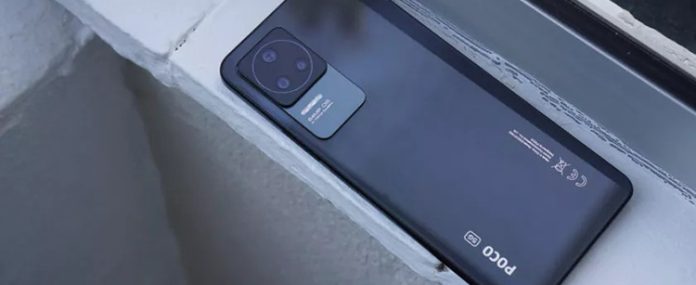
According to the Snapdragon India Twitter account, the Poco F5 will be equipped with the Snapdragon 7 Plus Gen 2 chipset. While no official release date has been announced, the addition of this strong processor hints that the Poco F5 will offer a major processing power improvement over its predecessor, the Poco F4.


We recently evaluated a Snapdragon 7 Plus Gen 2 reference handset and discovered that its CPU performance was comparable to some Snapdragon 8 Generation 1 phones. However, its traditional GPU benchmarks trailed those of last year’s leading Snapdragon devices. Nonetheless, in stress tests, the gadget outperformed some of these phones. It’s worth mentioning that these tests were performed on a reference device, so we’re curious how the results will translate to a commercial phone. Those seeking a low-cost handset with high processing power should keep an eye out for the Poco F5.

While there is no official word on the Poco F5’s additional specifications, rumors say that it could be a rebranded China-only Redmi Note 12 Turbo. In that case, users can anticipate a 6.67-inch 120Hz OLED screen, a 5,000mAh battery with 67W wired charging, and a 64MP+8MP+2MP camera system.

Last year, the Poco F4 was priced at €400 ($442) in Europe and Rs 28,000 ($342) in India. We anticipate that the Poco F5 will be priced similarly. Overall, with its fast processor and rumored specifications, the Poco F5 appears to be a solid pick for anyone looking for a low-cost gadget with excellent processing capability.

Samsung’s Push for New Chipsets in Wear OS Watches Could Give Galaxy Watch 6 Series a Boost

0

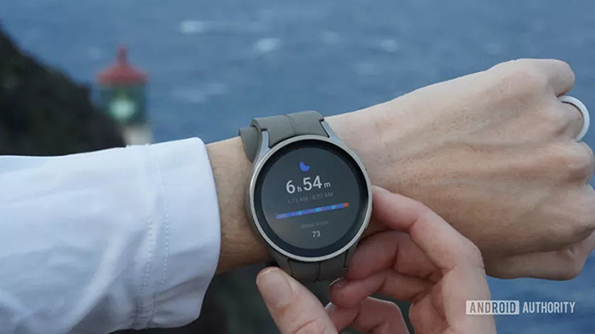
Samsung delivers new system-on-a-chip (SoC) models for its Galaxy S phones every year, but not for their smartwatches. The latest Galaxy Watch 5 series retains the same SoC as the Galaxy Watch 4 series, which debuted last year. However, Samsung’s rumored Galaxy Watch 6 series, which is slated to be released later this year, will have an improvement. SamMobile reports that the business is developing a Samsung Exynos W980 SoC to replace the 2021 Samsung Exynos W920 chip featured in the Galaxy Watch 4 and Galaxy Watch 5 models.
In numerous areas, the Exynos W980 is projected to outperform the W920.

Because it uses a newer 5nm process than the W920, SamMobile speculates that it could be up to 10% faster and have greater battery life. Surprisingly, Samsung is the sole major company producing new Wear OS watch chipsets. The Google Pixel Watch, for example, has a SoC from 2018, whereas the TicWatch Pro 3 Ultra, which was established in 2021, has a SoC from 2020. The Fossil Gen 6 is still using the 2020 processor.


If the Galaxy Watch 6 series includes a new Samsung Exynos W980 processor, it will be a substantial upgrade above all current Wear OS watches. These new smartwatches are set to be released this summer alongside the new Samsung foldable.

Telegram’s Feature-Packed Update 9.6 Offers Better Bot Functionality and Access to Send When Online

0

Telegram is a popular encrypted messaging app for Android that provides its users various features. Telegram’s developers published version 9.6 of the app only a month after the previous version. This update includes both cosmetic and functional changes.
Shareable chat folders are one of the new features included in Telegram 9.6. This tool allows users to share discussions with friends, family, or colleagues, making it easier to track many conversations. Users can also share public meetings or groups for which they are administrators. The app’s settings menu allows you to enable chat folders.

Custom backgrounds are another new feature in Telegram 9.6. Users can now add photographs from their gallery to the app’s default options. This feature allows users to personalize their chats. On Android, the wallpaper selection is accessible via the three-dot overflow menu in the chat header. When a user adds a wallpaper to a discussion, the other person receives an interactive “special message,” allowing them to add the same wallpaper to the conversation.
Telegram 9.6 further enhances bots by enabling them to launch web apps from any chat. Compatible bots can be utilized as a mention or direct link, and these web apps can be found within groups that allow all users to participate. This paves the way for multiplayer and collaborative online apps for groups or one-on-one talks. With the Telegram API now available, more developers may create online apps or games with a multiplayer component.

Telegram’s attachment menu now scrolls faster, and bots can use collectible usernames introduced last year. Furthermore, Telegram 9.6 allows users to form a group without adding members, which might help pin notes or change permissions before inviting people.
Finally, topic-enabled groups with fewer than 100 members can derive more information from read receipts, such as when other members viewed your message.

The Telegram 9.6 update is now available, and users may check the Play Store for updates or download Telegram 9.6 from APKMirror. Thanks to these additional features, Telegram remains a popular choice for Android users looking for safe and reliable chat software.

iQOO’s Z7 Series to Get Another Affordable Mid-Range Smartphone: iQOO Z7s

0

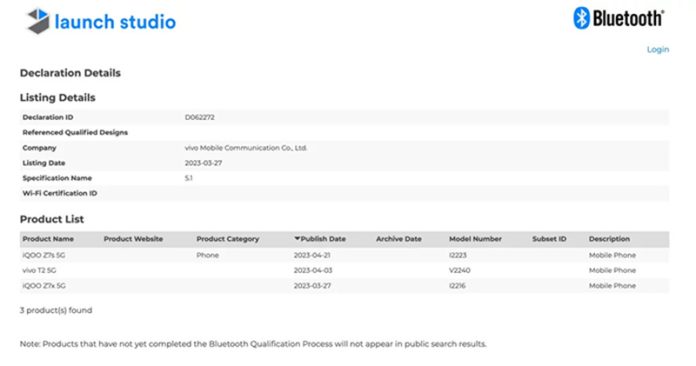
Vivo subsidiary iQOO recently announced two low-cost smartphones in its Z7 series, the iQOO Z7 5G and iQOO Z7x. Both smartphones have excellent hardware and are reasonably priced. However, the company appears to be on a roll, with a new model called the iQOO Z7s appearing on Bluetooth SIG, indicating an impending launch. The model number of the iQOO Z7s is I2223, and it will support Bluetooth v5.1, according to the Bluetooth SIG website. Unfortunately, no additional information on the gadget is available.

Because the iQOO Z7s is a new model, more information about its features and characteristics is needed. Based on its moniker, it will likely be another low-cost smartphone in the Z7 series, priced lower than the iQOO Z7 and iQOO Z7x. The iQOO Z7 costs $230, while the iQOO Z7x costs roughly $207.


The iQOO Z7 is already an excellent value-for-money alternative with outstanding features for the price. Despite its mediocre camera performance and FuntouchOS advertisements, we discovered that the Indian smartphone model could be an appropriate and economical 5G smartphone for all types of users in our evaluation.

The iQOO Z7 has a 6.64-inch LCD panel with a Full HD+ resolution of 2388 x 1080 pixels, a refresh rate of 120 Hz, and a contrast ratio of 1500:1. The MediaTek Dimension 920 chipset powers the Indian variant, while the Snapdragon 782G SoC powers the Indonesian variant. In India, the smartphone has a 4,500mAh battery and enables 44W charging.

Finally, iQOO is expanding its Z7 series by introducing a new model, the iQOO Z7s. While nothing is known about the gadget, it will likely be a low-cost smartphone in the series, priced lower than the other variants. The iQOO Z7 is already a strong budget option with reasonable functionality, and the iQOO Z7s might be an excellent addition to the series.

Xiaomi’s Civi 3 Likely to Launch in China Next Month with Dimensity 8200 Chip

0

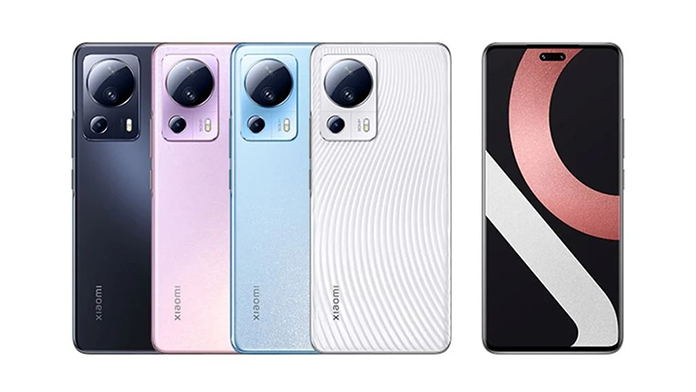
Xiaomi has gained 3C certification for its forthcoming Civi-branded phone, which is believed to be known as the Xiaomi Civi 3 or Civi 2s. The certificate indicates that the gadget with the MDY-14-EV model number may have a 67-watt rapid charging capability. The certification, however, did not give any further information about the phone.

According to reports, the Xiaomi Civi 3 would feature a curved-edge OLED screen with a pill-shaped notch for 32-megapixel dual front-facing cameras. The device is believed to have an FHD+ resolution and a refresh rate of 120 Hz. The Dimensity 8200 chip will almost certainly power it, and it will have a triple camera unit on the back, including an OIS-assisted Sony IMX8-series camera.


The Xiaomi Civi 3 is slated to be released in China in May, but there has yet to be the word on a global release date. Xiaomi released its Xiaomi 13 Ultra flagship phone and the Xiaomi Pad 6 tablet series in the Chinese market. The 13 Ultra is already available in China and will be available in Europe and other markets, but not in India. The Xiaomi Pad 6 will be available globally, while the Pro version will only be sold in China.

Summary:

Xiaomi has gained 3C certification for its future Civi-branded phone, which will most likely be known as the Xiaomi Civi 3 or Civi 2s.
The MDY-14-EV model number may come with 67-watt quick charging capabilities.
The Xiaomi Civi 3 is believed to include a curved-edge OLED screen with a pill-shaped notch and two front-facing cameras with 32-megapixel resolution.
The Dimensity 8200 chip will almost certainly power it, and it will have a triple camera unit on the back, including an OIS-assisted Sony IMX8-series camera.
The phone is scheduled to be released in China in May, but there has yet to be word on a global release date.
Xiaomi released the Xiaomi 13 Ultra flagship phone and the Xiaomi Pad 6 tablet series in the Chinese market.

Realme 11 Series Launching Soon: Get Ready for Some Exciting Features

0

Realme, a Chinese smartphone manufacturer, is set to launch its next smartphone series, the Realme 11 series, in China next month. This much-anticipated series will most likely feature many versions, including the Realme 11 5G, 11 Pro, and 11 Pro Plus, with the Realme 11 4G possibly following these devices. Although the company has not confirmed an exact launch date, a few Realme smartphones have lately surfaced on the website of the Bureau of Indian Standards (BIS). The Realme 11 5G, one of the brand’s most anticipated mid-range smartphones, has achieved BIS certification, as has another smartphone that could be part of the same series.

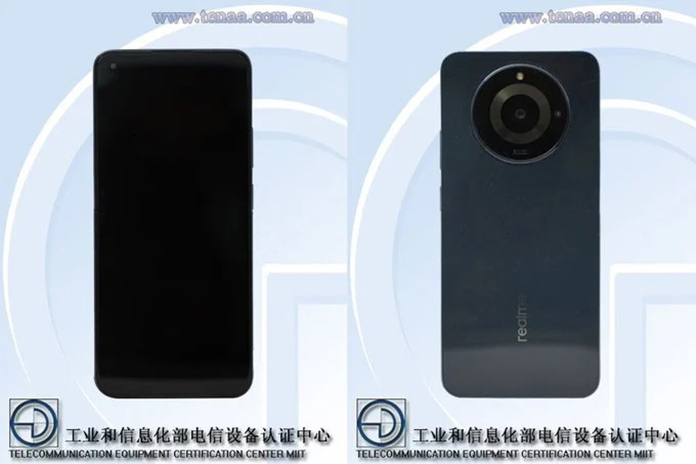
The Realme 11 5G has been seen with the model number RMX3751 on the BIS website. Simultaneously, another Realme smartphone with the model number RMX3750 has achieved BIS certification, albeit its name has not been revealed. Furthermore, the 11 5G was just listed on TENAA, exposing the design of the phone, which appears to be comparable to the 11 Pro and 11 Pro+ 5G variants. The back of the phone has a big circular camera module, two visible perforations, and an LED flash module. Unfortunately, no information on the camera sensors was provided in the listing.

The Realme 11 5G has a hole-punch cutout in the top left corner of the screen on the front. The 11 5G has a flat display, as opposed to the Pro variants, which will have curved panels. The power and volume buttons are located on the phone’s right side.

Little is known about the other characteristics and features of the 11 5G. However, the phone is expected to be released in China alongside the 11 Pro series next month. More information regarding the Realme 11 series will be released when it becomes available.